
A community of rural identities
Svetlana Popović Vujotić

Tourism
The World Tourism Organization and the specialized United Nations agency for the promotion of responsible, sustainable, and universally accessible tourism, UN Tourism (formerly UNWTO), has issued a call to its member states to submit their candidates for participation in the “Best Tourism Villages 2026” selection.
Representatives of the leading international organization in the field of tourism are encouraging applicants to become part of the largest global network of local communities, asking: What color is your village?
The United Nations Tourism initiative, established in 2021, is also an opportunity for tourism-oriented Montenegro, as a full member, to nominate its candidate for a global recognition that promotes the most valuable natural localities and fosters their ecological and responsible development through tourism. The call explicitly requires the nomination of a village, not a city—yet, somewhat “miraculously,” in 2025, our ancient town of Kotor, a UNESCO heritage gem, appeared on the list of selected most beautiful villages. Two Montenegrin villages, Godinje (Bar) and Gornja Lastva (Tivat), were officially recognized in 2021 within the support program of the “Best Tourism Villages” initiative as areas with great potential, but they did not receive the international BTV designation.
Nature has richly endowed Montenegro with its own gifts. Montenegro Wild Beauty gems are waiting to be presented to the world: in the Grebaje Valley, at the foothills of Bjelasica, Sinjajevina, Durmitor or Hajla, in Piva, Cetinje, around Lake Skadar, along the canyons of the Tara, Komarnica, and Morača rivers, on Luštica, in Ulcinj, through the hinterland of the Bay of Kotor, and along roads and hiking trails leading to Lovćen and Orjen… All that remains is to choose.

Lake Piva, Montenegro
Montenegro is truly wondrous! And the villages? Even more wondrous—beautiful, the most beautiful—ours, yet somehow belonging to no one, as they have fewer and fewer permanent residents. We long for global metropolises, while the world longs for our villages. Tourists, tired of civilization, seek what we barely notice, yet they dream of: peacefully gazing at the stars, listening to the wind and the murmur of streams, sensing the scent of grass and lush conifers, tasting wild strawberries, preparing dinner from forest mushrooms, and drinking fresh milk or homemade tea.
It is true that the number of rural households in Montenegro generating additional income from tourism is increasing, but few people—apart from the summer and winter seasons—choose to stay in Montenegrin villages, except for foreigners. Those who do not know how to appreciate nature do not know how to live. Philosophers say that in untouched green landscapes, the mind and soul reign.
In French villages at the foothills of the Alps or further south in Provence, writers, professors, doctors, engineers, architects, artists, athletes, and other personally and professionally accomplished individuals carefully nurture and preserve their piece of nature, their homeland, and their family heritage. For them, the village—not the city—is inspiration, meditation, therapy, pleasure, and a recipe for longevity. Natural materials dominate there—stone and wood. There is no concreting over views of the mountains, the sea, or a neighbor’s yard. The interiors of inherited houses and palaces may be moderately modified in terms of design and architecture, but the exterior must not be altered. The inherited horticultural environment is also protected. The locals speak several foreign languages. Unfortunately, none of these rural settings resemble our often neglected properties, dilapidated houses, worn local roads, closed village schools, and the lack of amenities for a more comfortable life in local centers. There are exceptions, but the exception is not the rule.
Annecy, France
Slovenia is one of the most successful European countries in developing rural and green tourism. Staying in nature the Slovenian way is an example of how to develop a destination sustainably in the long term, regardless of geographical size and objective limitations. The Styria region, known for its wine routes, thermal springs, untouched nature, and active holidays, ranked among the top three European regions for 2026, while the previous tourist year, 2025, was the most successful in the country’s history. According to data from the Statistical Office of the Republic of Slovenia, nearly 7 million tourists visited the country, generating 17.8 million overnight stays, which is a 6% increase compared to 2024. Foreign tourists accounted for 74.9% of all overnight stays, while domestic guests made up 25.1%. The most significant foreign market remains Germany, while the number of visitors from Poland, Spain, and Australia is rapidly growing. Tourism is gradually shifting away from urban centers to smaller destinations, where the focus is on nature, such as the Šalek Valley. Slovenia already has four locations with the “Best Tourism Villages” designation: Radovljica, Solčava, Bohinj, and Bled. These recognitions were awarded for preserving traditional values, promoting sustainable development, and caring for cultural and natural heritage.

Slovenians can also boast Olimje, several times awarded as the most beautiful village in Europe. This very location is an example that should be followed. In the settlement, located in close proximity to Terme Olimia, about 200 residents live. It is exceptionally well-maintained and belongs to the protected area of Kozjansko Park. It has a rich cultural heritage. The main attraction is a 17th-century castle that has been transformed into a monastery, where monks, using rare medicinal herbs and honey, and practicing centuries-old recipes, produce balms, creams, oils, and other herbal remedies. One of the three oldest pharmacies in Europe is located right here.
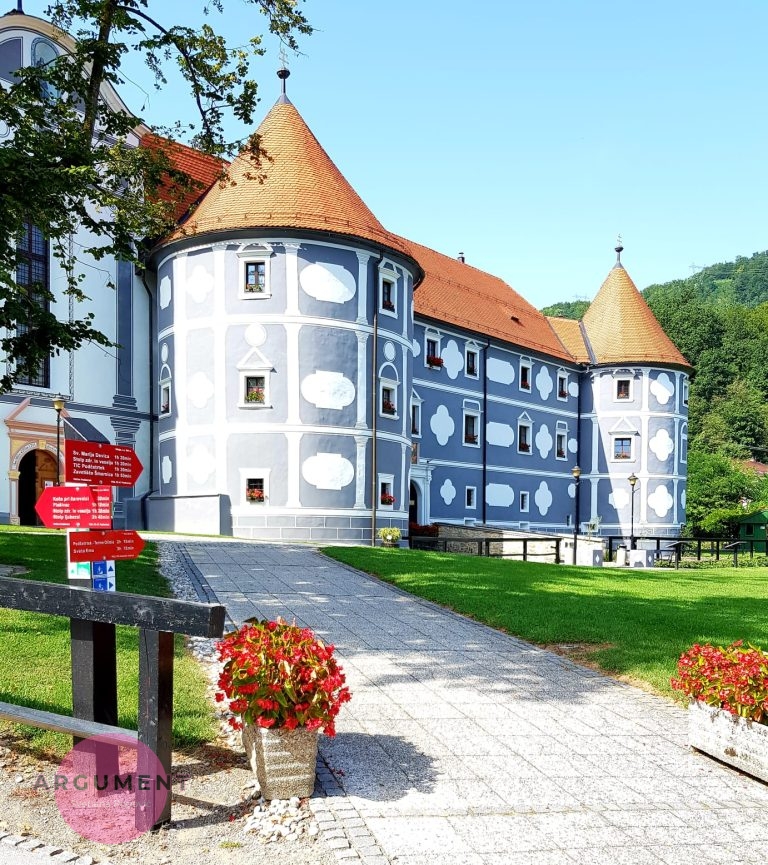
Olimje, Slovenija
Not far from the impressive castle lies the large estate of the Ježovnik family. Believing that staying in nature is essential for tourists, they created a unique attraction for all generations—“Deer Ridge” (Jelenov Greben). www.jelenov-greben.si
The deer, for which this place was a natural habitat since they first came to graze, have settled in, become tame, and turned into the symbol of the village. The hardworking hosts have created a variety of tourist offerings: accommodation in authentic wooden houses, a rural wellness center for which they have received multiple awards, a spacious playground for children, a shop with homemade food and drinks, a village pastry shop, a restaurant, and a wide range of handmade souvenirs. Entry to the estate is free, and visitors come from all over the world.
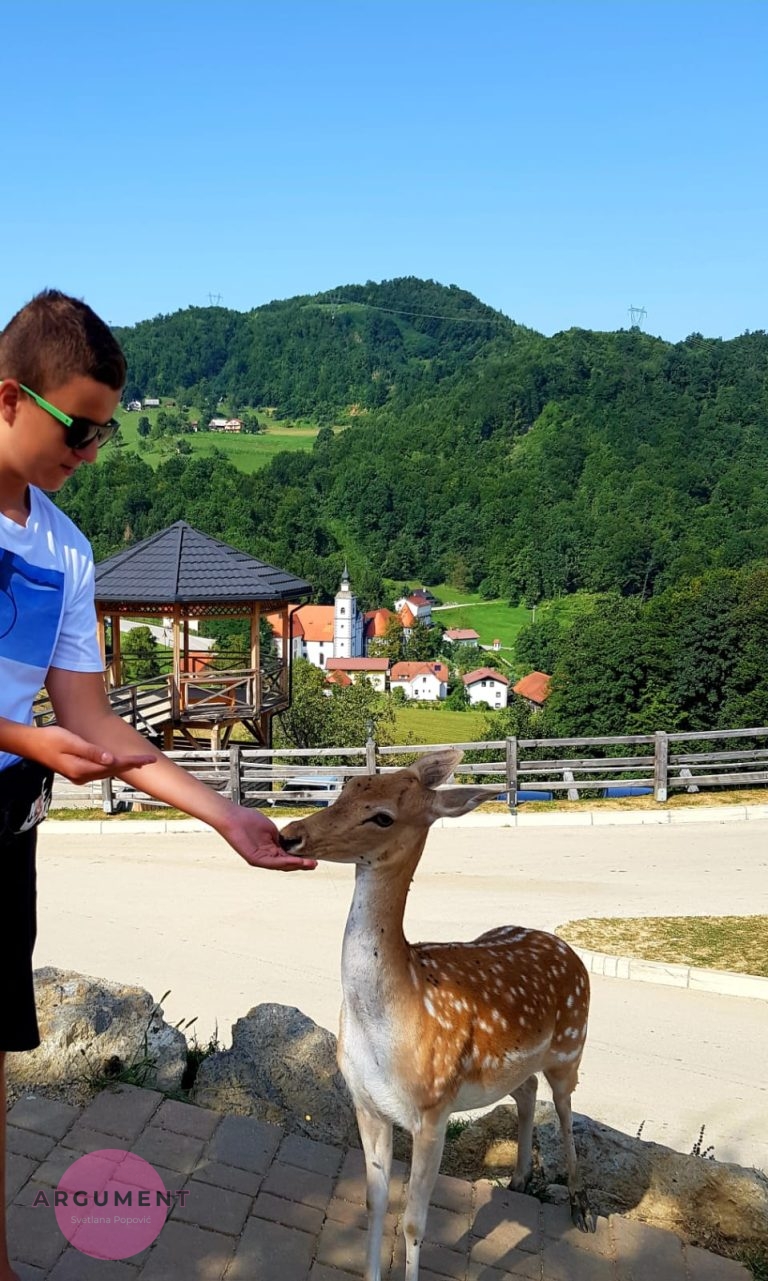
Jelenov greben, Slovenija
Sela, regije i države The ones we write about in this text are only a fragment of the truth about an almost incomparably different reality (in this case, a tourism-related one) that we are simultaneously living in across various parts of the world. Although we are all just people, our priorities, interests, knowledge, culture, heritage, economy, ecology, size, and position make us different. That is why we should always support unity around shared values, no matter how much we doubt that it is not enough for success—or that even if it is, such success may not be so significant or visible on a global scale. However, the fact that in 2025 nearly 300 applications were submitted for the title of the most beautiful village in the world, and that 52 original locations from 65 UN Tourism member states were selected, shows that we—people who live from tourism and for tourism—have actually succeeded, even exceeded expectations, especially considering that another 20 villages joined through the so-called upgrade program. The network of the best rural areas, viewed through its basic unit—the village—is gradually becoming the largest community of such destinations in the world. It may sound unusual, but the formula is simple, and as a recognizable tourist destination, we must master that equation.

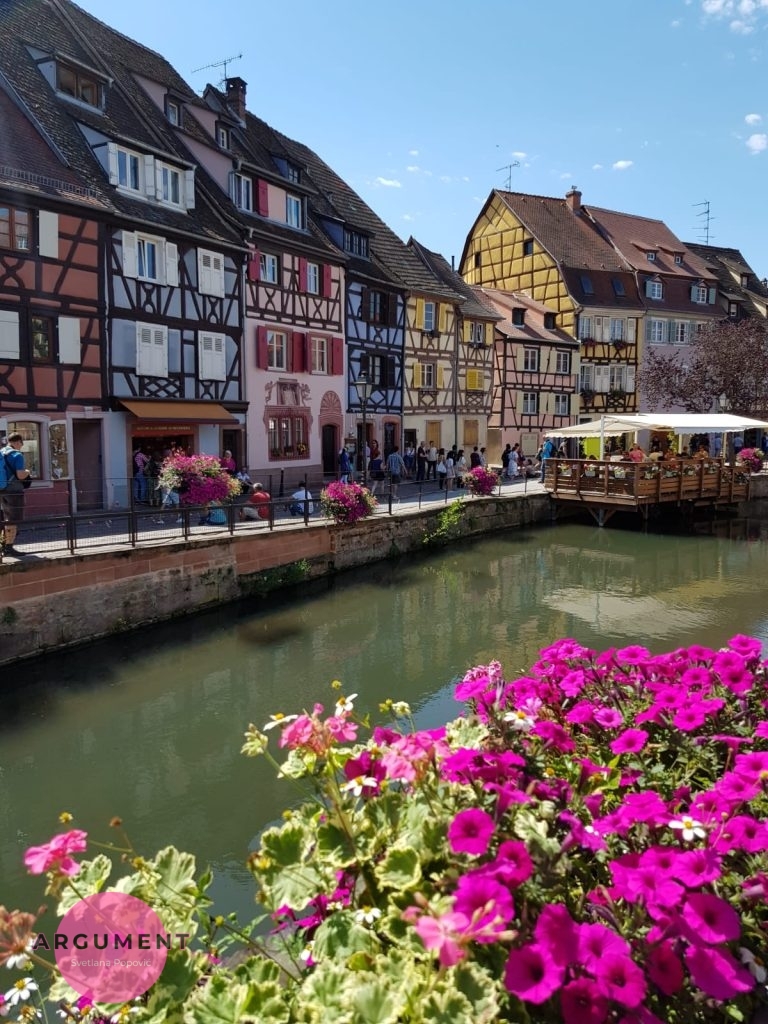
Colmar, France
At the beginning of last year, it was officially confirmed that tourism had returned to pre-pandemic levels, with around 1.4 billion international travelers in 2024. By 2030, 2 billion tourist arrivals are expected. The World Tourism Organization emphasizes that the question is no longer how fast tourism is growing, but how well it is managed. Sustainable growth will depend on strong leadership, adaptable organizations, and talent ready for the future. https://www.untourism.int
Montenegro, as a country whose economy still significantly depends on tourism, must have a thoughtful and effective response to future challenges.