
The global fame of the crooked hotel
Svetlana Popović Vujotić
Tourism

Travel is like the beginning of a new life, a captivating illusion without which people would be deprived of hope and momentum. Yet nothing captures the human need to move, explore, learn, and transform quite like tourism.
"People travel to seek what they do not have, and return to preserve what they do have," wrote Ivo Andrić.
The main reason people choose a particular travel destination is the tourist attraction that draws them with its unique features.
Everything that nature and humanity have created over time, together with the supporting infrastructure that ensures visitors a safe and enjoyable stay, can be a tourist attraction.
We traveled to southern Germany, in the federal state of Baden-Württemberg, because of a house whose centuries-long defiance of gravity earned it a place in the Guinness World Records.
Ulm is an independent urban district within Baden-Württemberg. It has a long and rich history, from a royal estate and the status of a Free Imperial City, through major Napoleonic battles, to a modern technological marvel, the birthplace of Einstein, and one of the most desirable places to live in modern Germany.
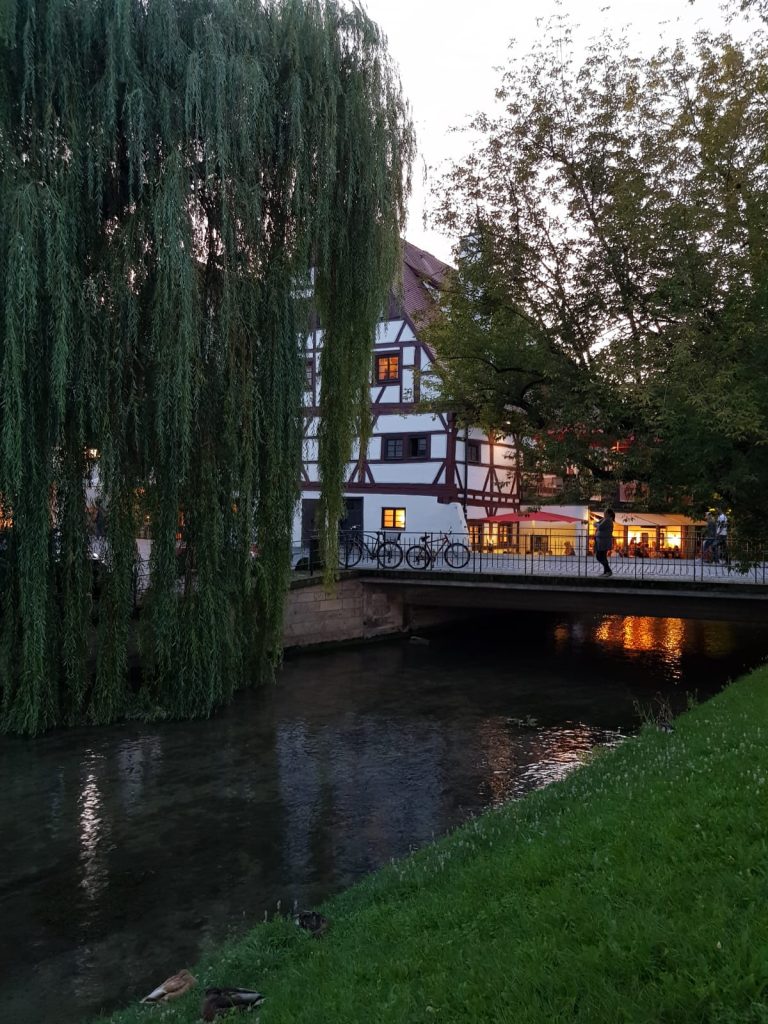
The River Blau flows through the city, and together with its many canals and branches, as well as the Alpine River Iller, it eventually joins the Danube.
The waterways that wind through the old town create a remarkable atmosphere for visitors from around the world, earning it the nickname **"Little Venice."**
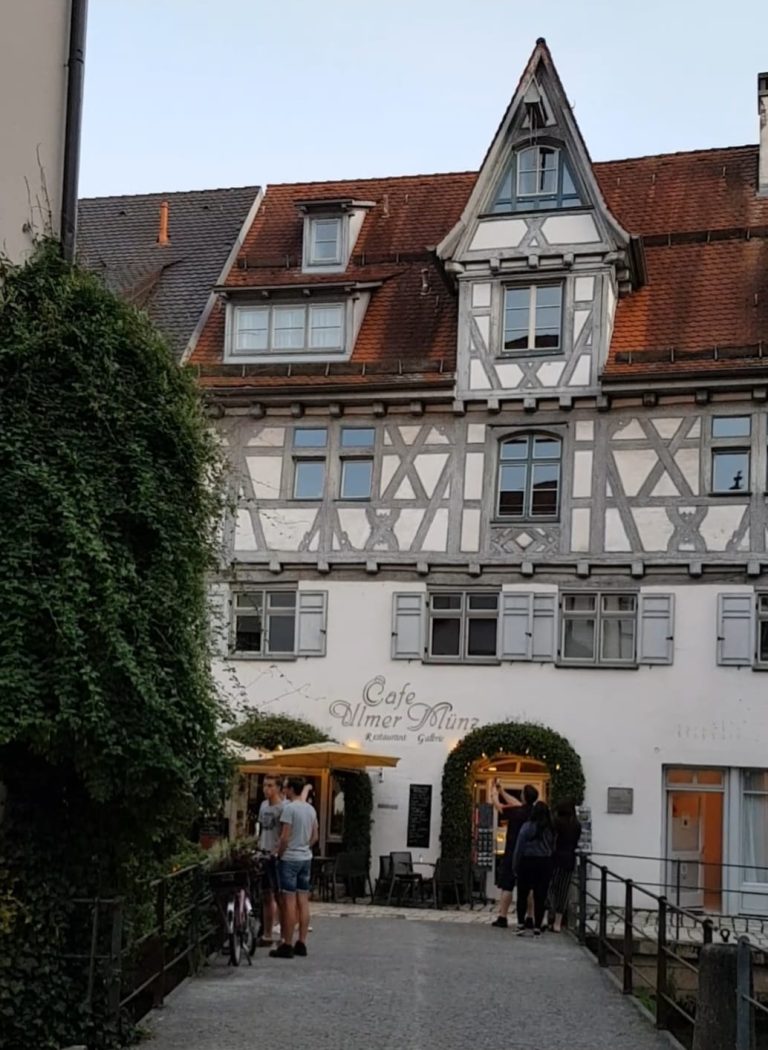
The Fishermen’s Quarter (Fachwerkhaus) is the oldest, most romantic, and most visited part of Ulm, preserving the spirit of bygone times through its original architecture and authentic way of life.
During the Middle Ages, it was a densely populated working-class district inhabited by craftsmen, captains, boatmen, and fishermen.
In the basements of the houses along the waterfront, locals mended and wove fishing nets and stored wine and fish.
The ground floors of the buildings, whose walls were supported by massive timber beams clearly visible from the outside, housed small shops and taverns. On the upper floors overlooking the canal—most without balconies—living rooms and bedrooms could be seen behind the colorful façades.
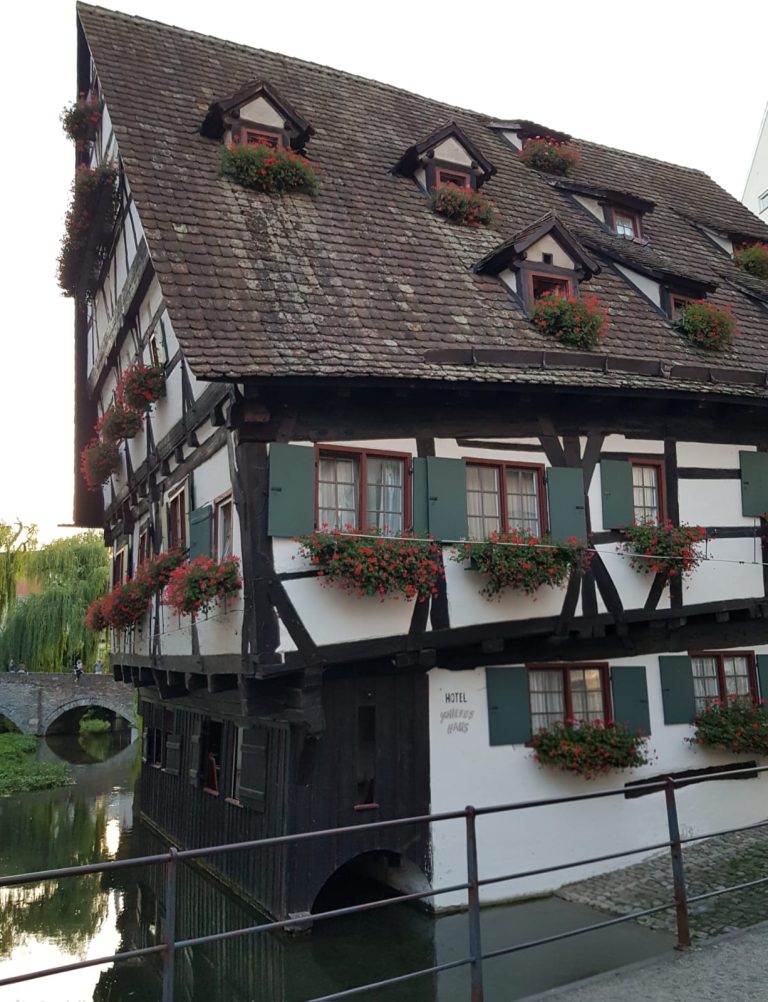
Part of this historic setting since 1406 is the late Gothic wooden Fishermen’s House, which, after centuries of aging, became known as the Leaning House (Schiefes Haus).
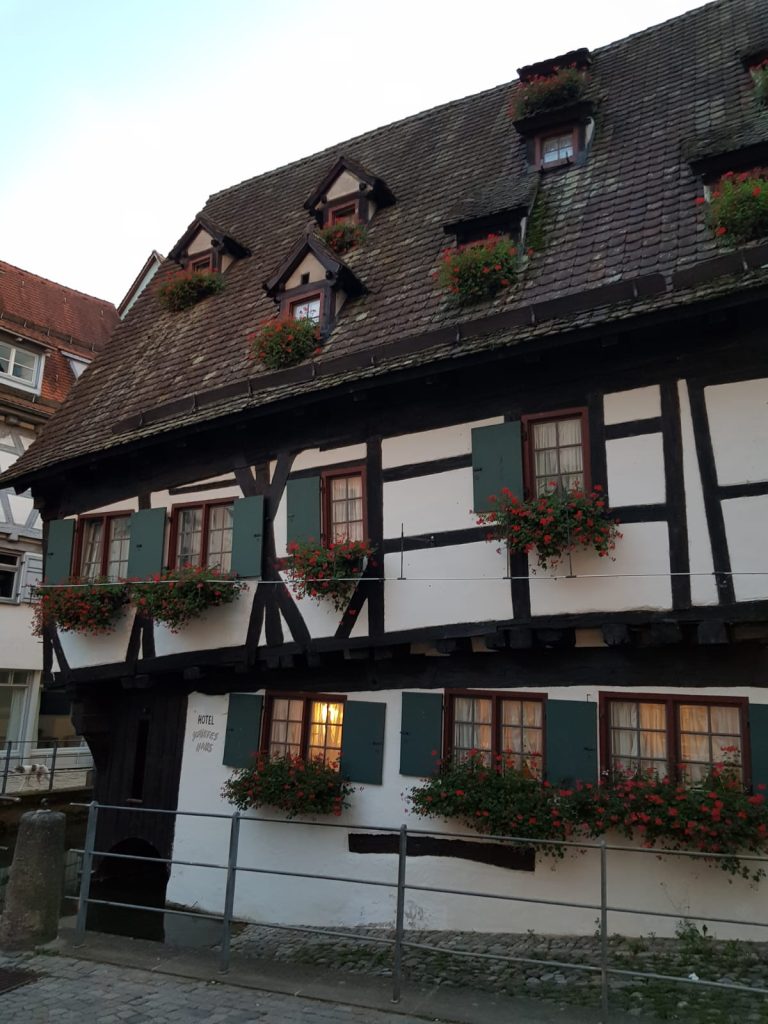
In 1443, the historic building was expanded and extended toward the River Blau, giving it the exterior appearance and dimensions that can still be seen today in Ulm’s famous Fishermen’s Quarter.
The northern part of the house rested on solid foundations of earth and gravel, while the southern section was built on much softer, marshy ground along the riverbank.
During the 17th century, the supporting pillars began to sink, and some were mistakenly cut down by the residents, causing the building to gradually lean toward the river and threatening it with collapse.
The problem was only partially resolved at the time.
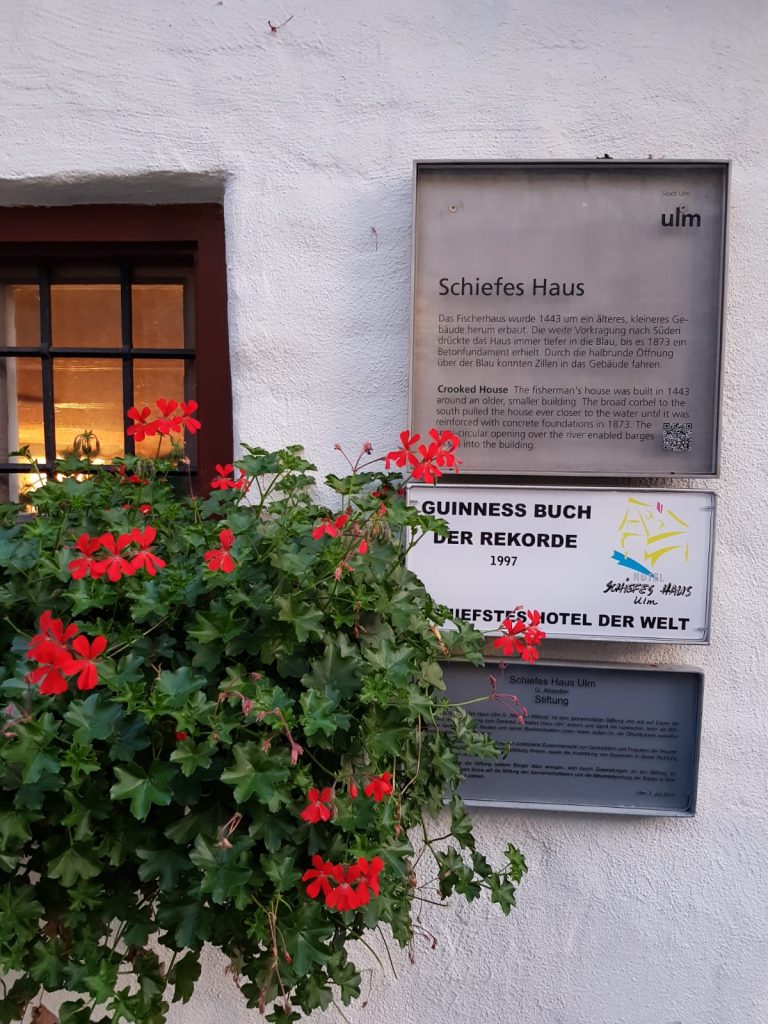
The house’s authentic structure and distinctive lean remained unchanged even after its successful restoration and conversion into a hotel in 1995, a project for which the architects and restoration experts received the prestigious Baden-Württemberg Monument Preservation Award (*Denkmalpreis des Landes Baden-Württemberg*).
The load-bearing timber beams on the southern side were reinforced with concrete foundations…
Despite the force of gravity, the house continued to stand with a lean of between 9 and 10 degrees (for comparison, the Leaning Tower of Pisa tilts by about 4 degrees).
The house gained worldwide recognition as an architectural landmark and a unique tourist attraction—still fully functional after more than 600 years—in 1997, when it was officially recognized by Guinness World Records as the world's most crooked hotel.
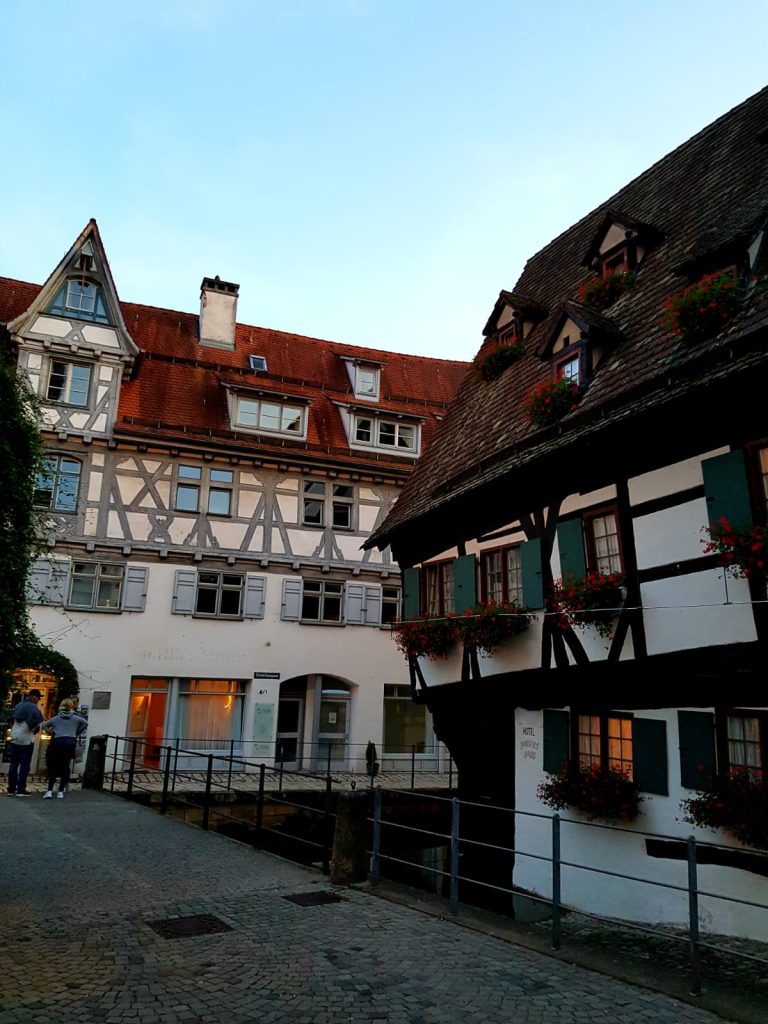
Interestingly, because of the building’s pronounced lean, the interior floors of the hotel have height differences of up to 40 centimeters. To ensure guests do not feel as though they are sliding or losing their balance, all of the furniture was custom-made and carefully leveled.
A spirit level is built into the headboard of every bed, allowing guests to see that they are sleeping on a perfectly level surface, even though the surrounding walls and floors are noticeably slanted.
The shower enclosures and bathtubs are installed at an angle opposite to the slope of the floor, ensuring that water drains properly and does not spill out of the bathroom.
The Leaning House Hotel (*Schiefes Haus*) has 11 guest rooms, with the most challenging experience awaiting those who stay on the southern side, where the building's tilt is at its greatest.
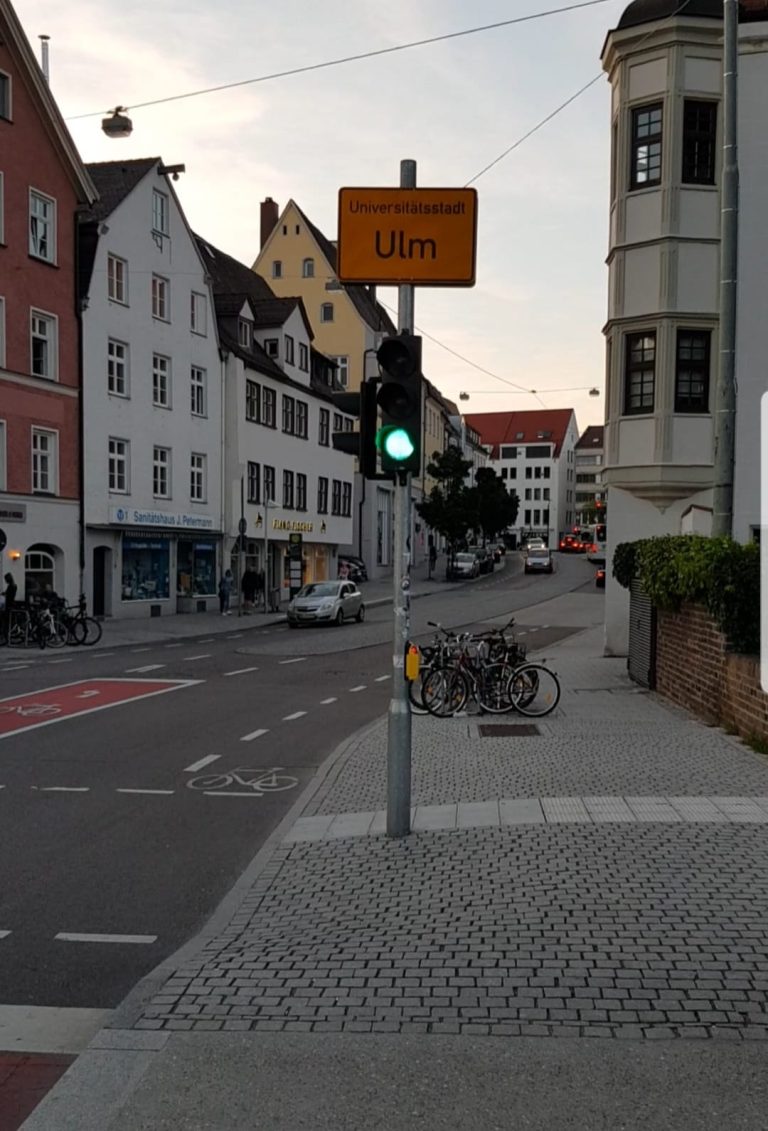
Ulm is located about 100 kilometers from the borders of France, Austria, Switzerland, and Liechtenstein, while the nearest airport is Memmingen Airport.
This is more than a travel feature—it is also a story about Europeans, and about those who aspire to become Europeans.
Those who are willing and able to preserve and promote their cultural heritage and identity in this way are also prepared to embrace the values and standards of European society.