
By Roman metro to antiquity
Svetlana Popović Vujotić
Tourism
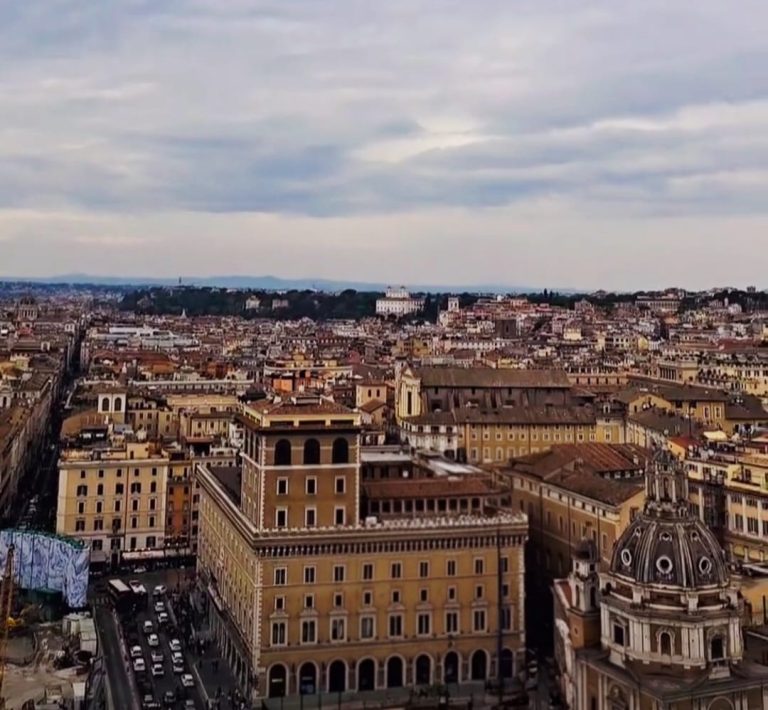
Life in a metropolis is nowhere near as similar to the idyllic photographs on postcards, covers, or social media, which authors present to suggest to the audience that that very city is synonymous with paradise.
Why am I writing this? Because due to the enormous number of residents and tourists concentrated in a small area, everyone suffers—from individuals to the community as a whole. Urban infrastructure is under maximum strain, the cost of living is high, space is limited, and stress, noise, and environmental pollution are at their peak.
The rivers of people have also increased social alienation.
Nevertheless, in bustling cities of millions, life opportunities and freedom of choice are incomparably greater than in small towns. Education is better, healthcare is of higher quality, and the protection of rights is stronger. Cultural offerings are exceptional and invaluable because they give deeper meaning to human existence, influencing mental health, cognitive development, emotional intelligence, social cohesion, and the preservation of tradition.
That is one of the main reasons why all roads lead to Rome—including ours.
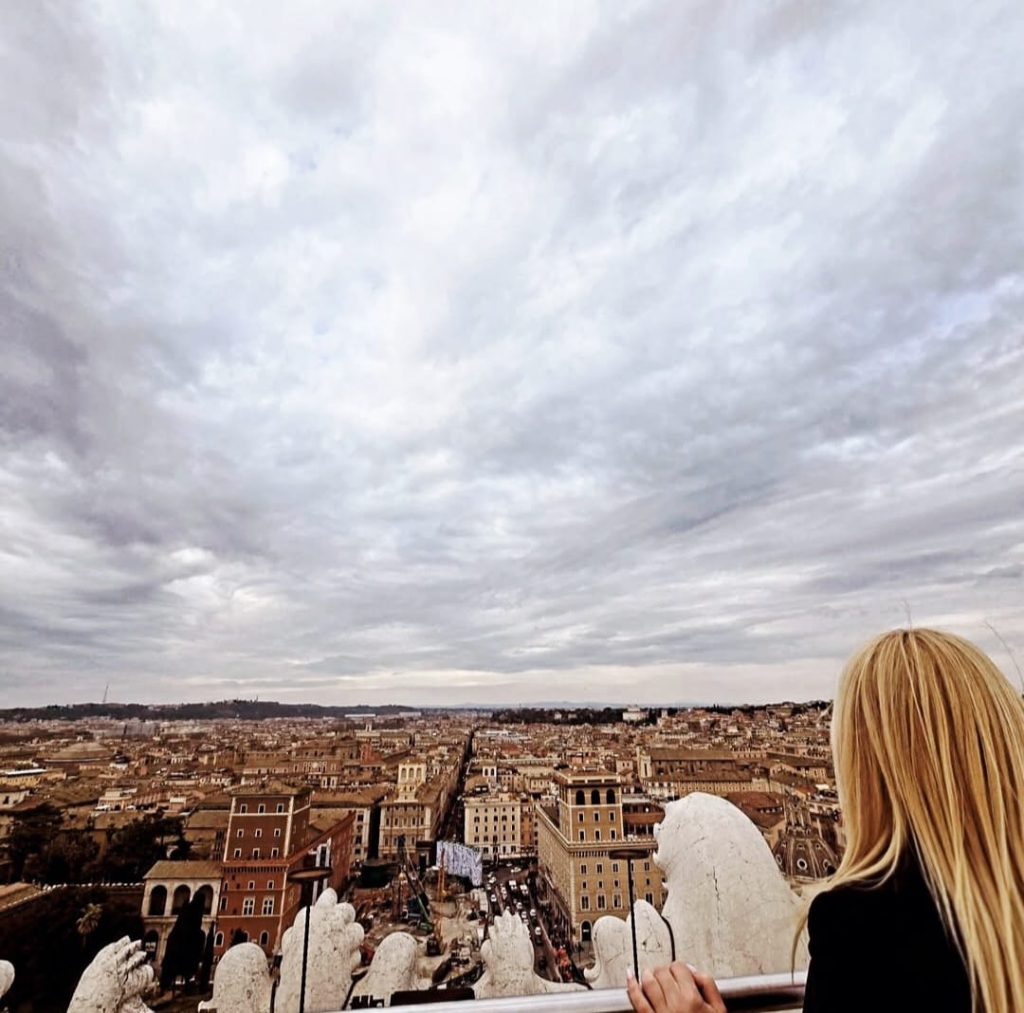
The historical continuity of the “Eternal City,” as it was first called by the poet Tibullus in the first century AD, has endured for three millennia, surviving the fall of the Roman Empire, numerous devastations, plagues, and wars.
Everything came and went, yet Rome endured. People never abandoned it, and its power always remained dominant. From renowned military leaders, politicians, and statesmen such as Julius Caesar, Marcus Aurelius, Emperor Trajan, and Cicero, to incomparable artistic masters such as Michelangelo Buonarroti, Gian Lorenzo Bernini, and Raphael, Rome successfully transformed its identity (kingdom, republic, empire...) and was reborn time and again, ready to thrive in new circumstances.
Open to the world, it embraced the best experiences of other peoples.
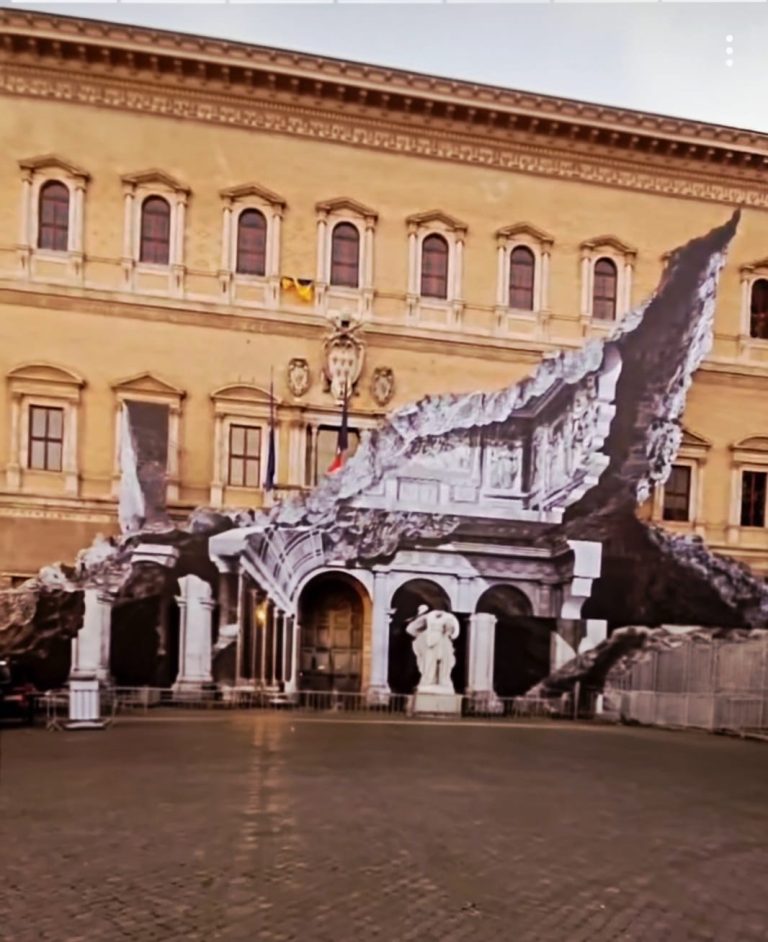
Situated on seven hills in the central part of the Lazio region, Rome remains in constant contact with the Mediterranean. Within the territory of Rome lies Vatican City, the smallest state in the world, the seat of the Pope, and the spiritual center of the Catholic Church.
The city has continuously invested in its own myth of immortality.
Proof of the direct and fascinating continuation of the myth of the “Eternal City,” carefully planned and based on authentic archaeological artifacts, is the latest integration of the past into the functional everyday life of the 21st century through the so-called archaeostations—museum-like archaeological metro stations: San Giovanni, and the newly opened Colosseo–Fori Imperiali and Porta Metronia.
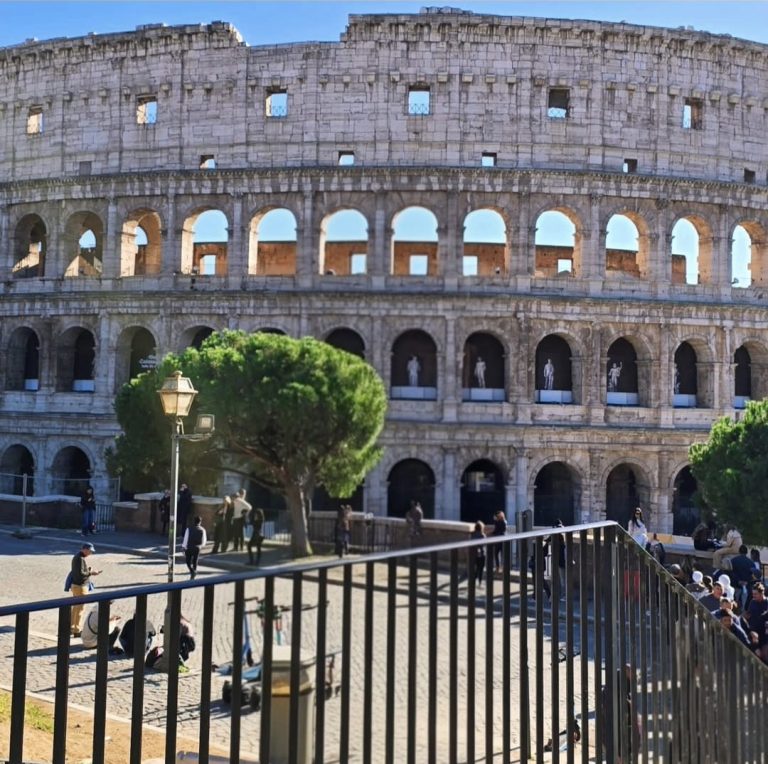
The Colosseum, the largest and most famous amphitheater on our planet, once a venue for gladiatorial combats, animal hunts, and public executions, and one of the New Seven Wonders of the World, is visited by more than seven million tourists each year. Its popularity was further enhanced by the opening of the Colosseo–Fori Imperiali metro station at the end of 2025.
The station is just one of several planned along Line C, which connects the eastern suburbs of the Italian capital with the historic city center. Construction began in 2013 and, due to complex archaeological excavations, lasted significantly longer than originally planned. Porta Metronia station was opened at the same time.
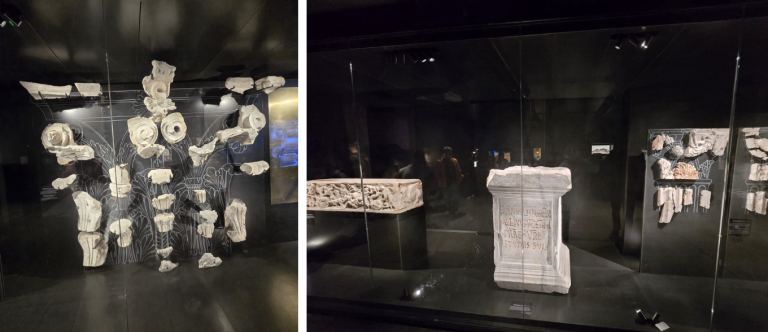
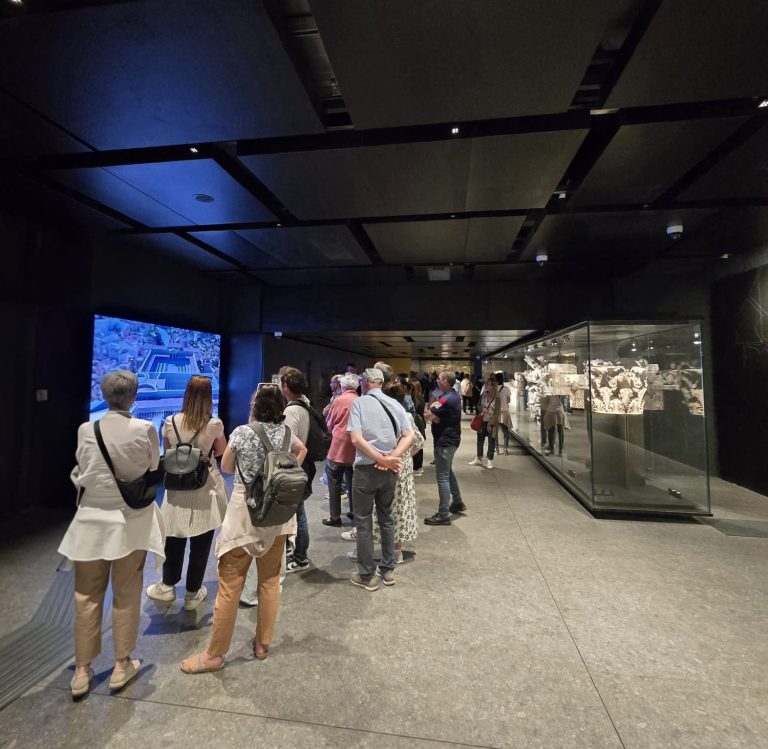
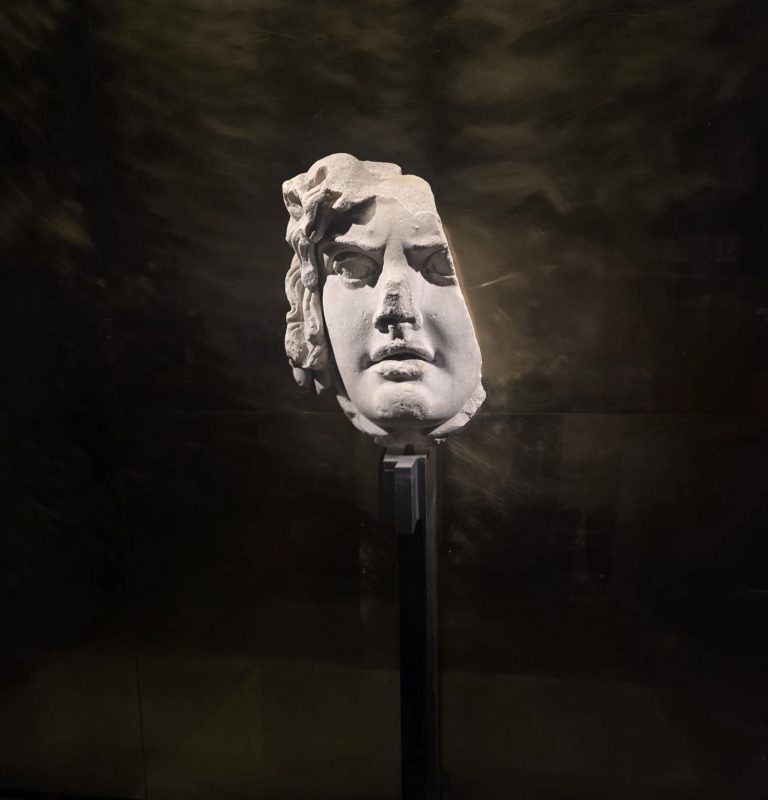
Ovaj saobraćajni, putnički ali i svojevrstan turistički tranzit, sagrađen je na dubini preko trideset metara. Nalazi se ispod Koloseuma na nekoliko nivoa i funkcioniše kao podzemni muzej. Izloženi eksponati pronađeni tokom dugogodišnjih iskopavanja, zaštićeni su neprobojnim staklenim i pleksiglas vitrinama sa kontrolisanom mikroklimom, imaju diskretno osvjetljenje, jasne kataloške opise i 24-satni video nadzor. Stalno je prisutno i fizičko obezbjeđenje.
A visit to this unique archaeological museum offers an opportunity to explore the history of Rome from the 1st century BC to the 1st century AD, as evidenced by the discovered ancient wells, the remains of an ancient residential house with preserved frescoes and imperial-era thermal baths, and numerous other everyday artifacts.
A special circular opening in the passage connecting Metro Lines B and C offers an unusual view of the Colosseum from below.
To help passengers and visitors move more easily and quickly between the different levels to and from the platforms while exploring the museum exhibits, modern elevators, comfortable escalators, and spacious corridors are available.
The Colosseo–Fori Imperiali metro station was designed to accommodate up to 50,000 visitors per day.
A tour of the main area beneath the ticket barriers, featuring multimedia screens and part of the exhibit collection, is free of charge, while access to the lower levels—where the most significant archaeological discoveries are displayed—requires only the purchase of a metro ticket.
After completing the visit to the archaeological museum station, visitors emerge directly into the heart of ancient Rome.
On the occasion of the opening of one of the most impressive metro stations in the world, Rome’s mayor, Roberto Gualtieri, stated, among other things, that we are witnessing a historic moment.
Inspired by his statement, as well as by our curiosity about the multiple effects—including the tourism-related benefits—of such an offering, we sought the opinion of an expert.
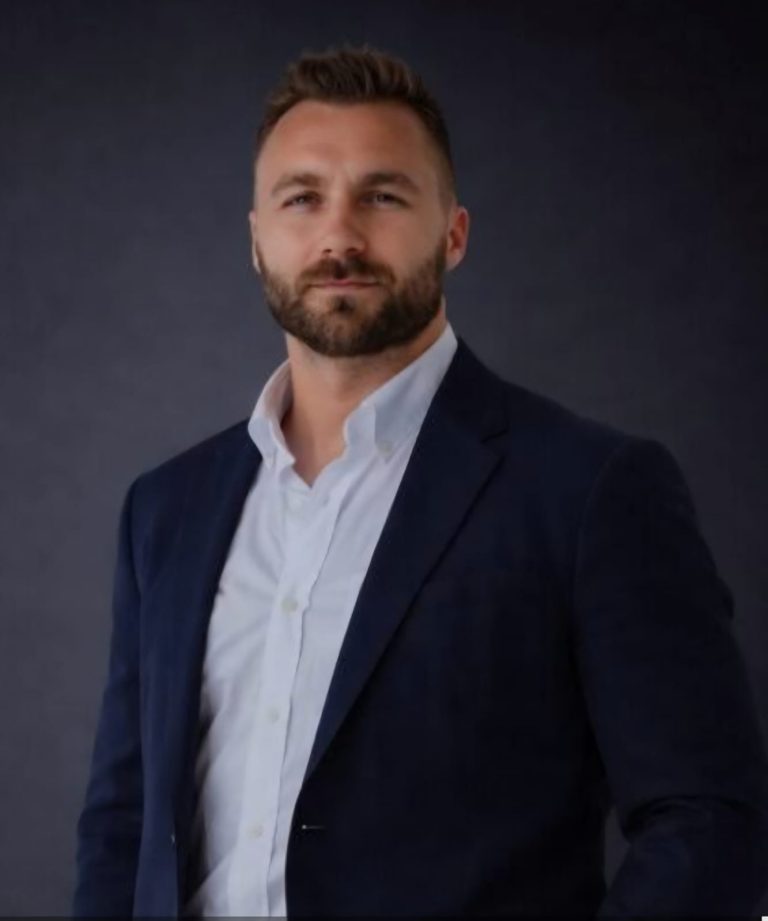
Our interviewee is Professor Ante Mandić, PhD, from the Department of Tourism and Economics at the Faculty of Economics, University of Split. He is a research associate of several prestigious American colleges, an author and editor of scholarly works in the fields of eco-tourism and sustainable tourism, and is included in the Stanford–Elsevier 2025 list of the world’s top 2% most-cited researchers.
Argument: Has the opening of the first archaeological museum metro stations in Rome marked the beginning of a new era of tourism in the ancient city, and how do you interpret this development?
Professor Ante Mandić, PhD. I would say that this is not merely a new stage in tourism, but a new way of understanding the city. For centuries, Rome has been a place where history is observed; now it is becoming a city where history is experienced in everyday life. Stations such as Colosseo and Porta Metronia demonstrate that heritage is no longer a separate backdrop intended for occasional visits, but an active part of urban life. This represents an important civilizational shift.
Argument: Is the example of the Colosseo station truly a democratization of culture and tourism through the integration of heritage into everyday life?
Professor Ante Mandić, PhD. In a certain sense, yes. Culture has long been associated with institutions and the ritual of visiting a museum or a heritage site. Spaces like these shift that boundary and make cultural experiences more accessible to the general public. However, true democratization involves more than just physical accessibility—it also requires high-quality interpretation. Heritage must remain an object of understanding, not merely one of visual consumption.
Argument: Is this a form of cultural tourism adapted to new generations and their limited attention spans?
Professor Ante Mandić, PhD. I think it would be an oversimplification to speak of a “lack of attention” among younger generations. Rather, I would say that we live in a time characterized by different patterns of perception. Modern people move quickly, yet they still seek meaning and authentic experiences. That is precisely why places like Colosseo have such potential: they do not replace knowledge, but they can spark the curiosity from which knowledge emerges.
Argument: Can this form of tourism threaten traditional museums and diminish the educational value of travel?
Professor Ante Mandić, PhD. I do not believe so. History teaches us that new media rarely destroy those that came before them; more often, they redefine them. A metro station cannot replace a museum, just as an introduction cannot replace a book. It can serve as a first encounter, a starting point of interest, and an invitation to deeper exploration. The educational value of travel does not depend on the place itself, but on the way a person interprets the experience.
Argument: Are such metro stations the fastest and most authentic journey from antiquity to the modern age?
Professor Ante Mandić, PhD. That may indeed be their greatest symbolic value. In Rome, descending underground is not merely a transportation act but an encounter with the city's layered history. Few places in Europe demonstrate so powerfully that the modern world does not erase the past, but quite literally rests upon it.

Argument: Do Croatia and Montenegro have the opportunity to make their cultural heritage more visible and accessible, and what message would you convey in the context of European integration?
Professor Ante Mandić, PhD. Absolutely. However, heritage in itself is not a development strategy. What is needed are knowledge, systematic interpretation, and a responsible cultural policy. Croatia’s experience shows that the European framework can help protect heritage and enhance its international visibility, but only if a country knows what it wants to preserve and how to present its own identity without reducing it to folklore or oversimplifying it for commercial purposes.
For Montenegro, as for all smaller European countries, the key question is not how to fit into Europe, but how to remain authentic within the European space. This is neither an easy nor a difficult task—it is, above all, a serious undertaking that requires cultural self-confidence, strong institutions, and a long-term vision.
Following the opening of the Colosseo–Fori Imperiali and Porta Metronia museum metro stations, the historic undertaking will, in fact, only be beginning. Next will come the construction of the largest and most technologically advanced museum station in Europe—Porta Venezia. After that, engineers and archaeologists will embark on a new challenge, tunneling beneath the Tiber River until they enable both Romans and tourists to reach the final destination on Line C by metro: San Pietro.