
All the colors of Montenegrin wool.
Svetlana Popović Vujotić
Life
Whenever I was searching for an authentic journalistic story, looking for keepers of traditional crafts in the north of Montenegro, the signs along the road would tell me to first go to Pljevlja—once known as Tašlidža (“a place on stone”)—where the most skillful masters of their trade, from the early Middle Ages to the beginning of the modern era (9th to 16th century), created everything that could be shaped by hand, using precious metals, leather, textiles, stone, or wood.
The modern age, marked by a worrying shortage of craftsmen, once again led me to the same address.
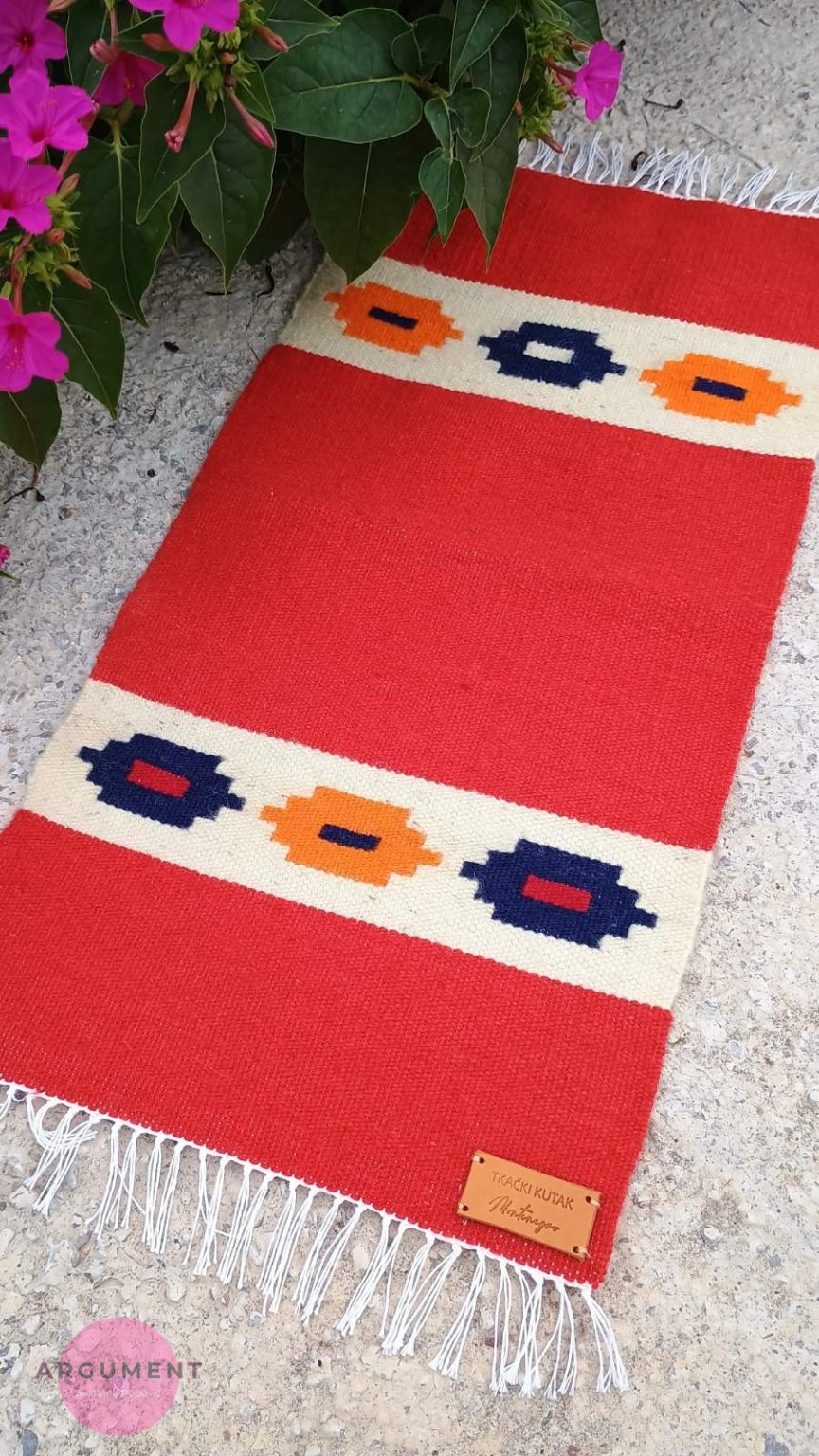
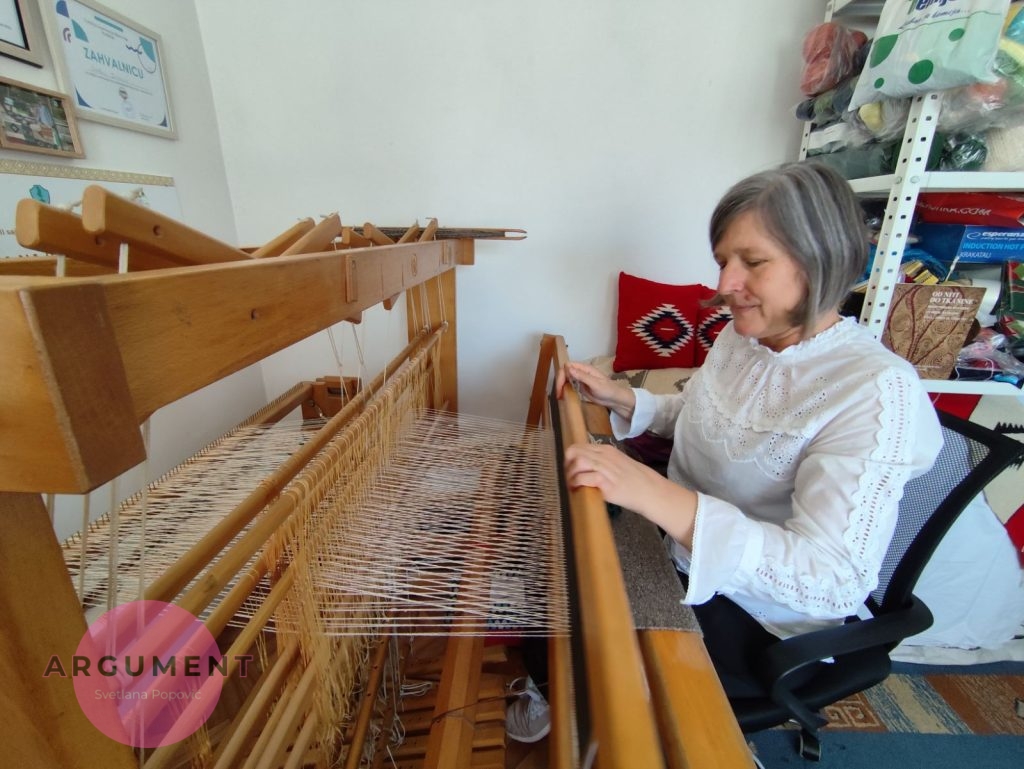
Svetlana Živković is a woman from Pljevlja, a mother of three, and a guardian of the ancient skill of weaving wool products. “I enriched my decision to fully devote myself to my children and family through weaving—a form of creativity that offers unlimited possibilities. Since 2006, my life has been intertwined with various threads and motifs,” says Mrs. Živković.
Svetlana Živković
Weaving is a tradition of our region, but it also belongs to the whole world, and Svetlana learned this craft from a weaver from the once-renowned Dragačevo Cooperative. “In the past, our mothers and grandmothers worked hard to create and weave both functional and decorative textiles. Today, it is easier and different, as spinning mills and machine processing of wool exist. However, this is not the case in Montenegro, where there is no organized purchase or processing of this wonderful natural material,” says our interviewee.
The hardworking woman from Pljevlja sources wool ready for weaving from spinning mills in a neighboring country, and in addition to wool, she also uses cotton to create traditional handicrafts. “As for weaving, the preparatory process requires the most time, precision, and patience. It consists of warping, winding onto the beam, threading, passing through the reed, and tying. Only then can the weaving process begin—and I would say, the enjoyment as well,” says Mrs. Živković. Foreigners value and recognize the difference between handmade work and mass industrial production.
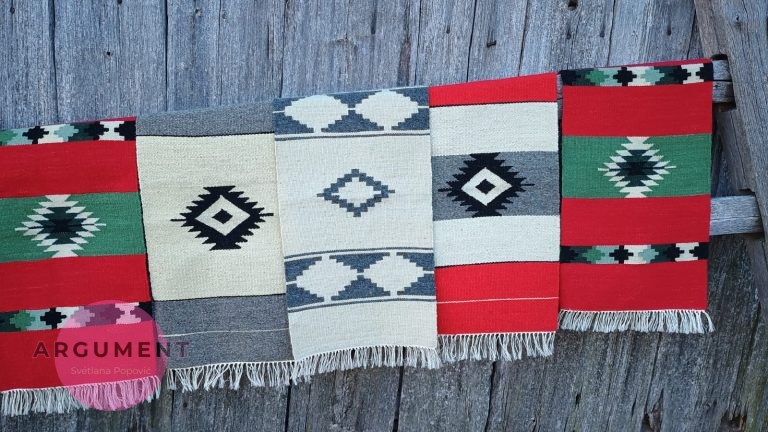
Svetlana Živković is, fortunately, not the only one in Pljevlja preserving the spirit of traditional craftsmanship (bags, scarves, placemats, runners, garments). Although one cannot make a full living from selling these products, they can help supplement the household budget. The support of family and friends is the most important, while among institutions, her work and dedication have been consistently recognized by the Zavičajni muzej u Pljevljima and JP Nacionalni parkovi Crne Gore.
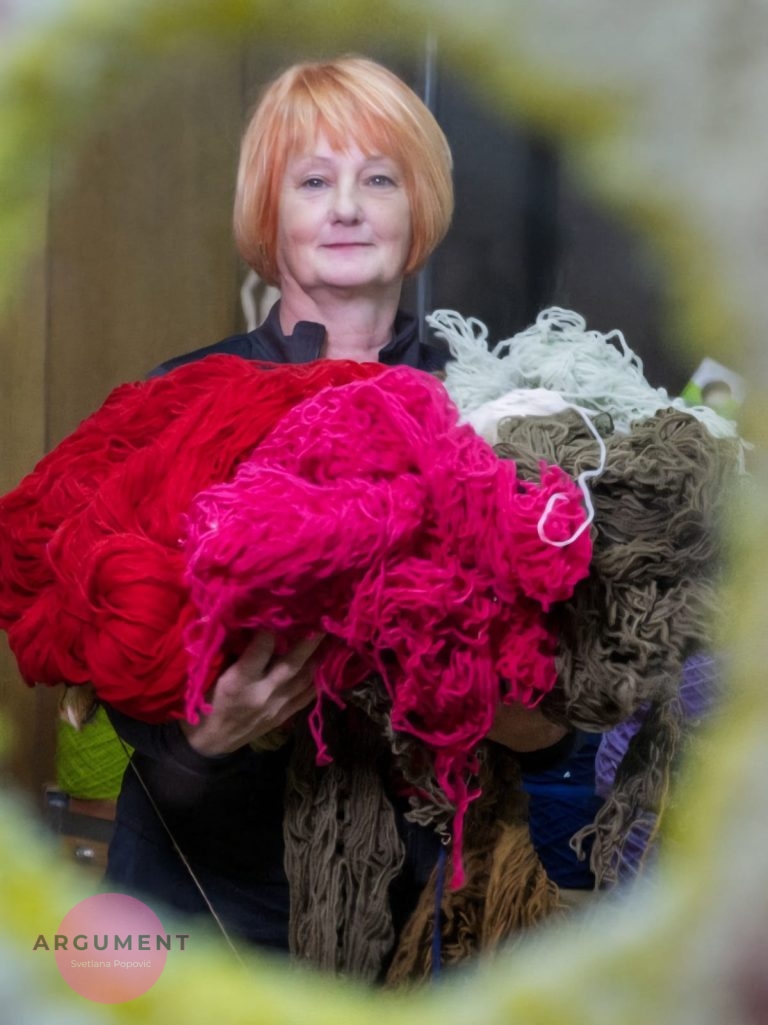
mr Jelena Đukanović
While the weaver from Pljevlja sources wool from another country, Jelena Đukanović, M.A., a lecturer at the Faculty of Design and Multimedia at the University of Donja Gorica, teaching the courses Textile 1 and 2, points out that in Montenegro, as in most European countries, there is a problem of surplus sheep wool that no one needs. “With the collapse of the textile industry in Montenegro in the 1990s, the organized purchase of wool ceased, turning this valuable textile raw material into waste—and a serious environmental problem,” warns Đukanović.
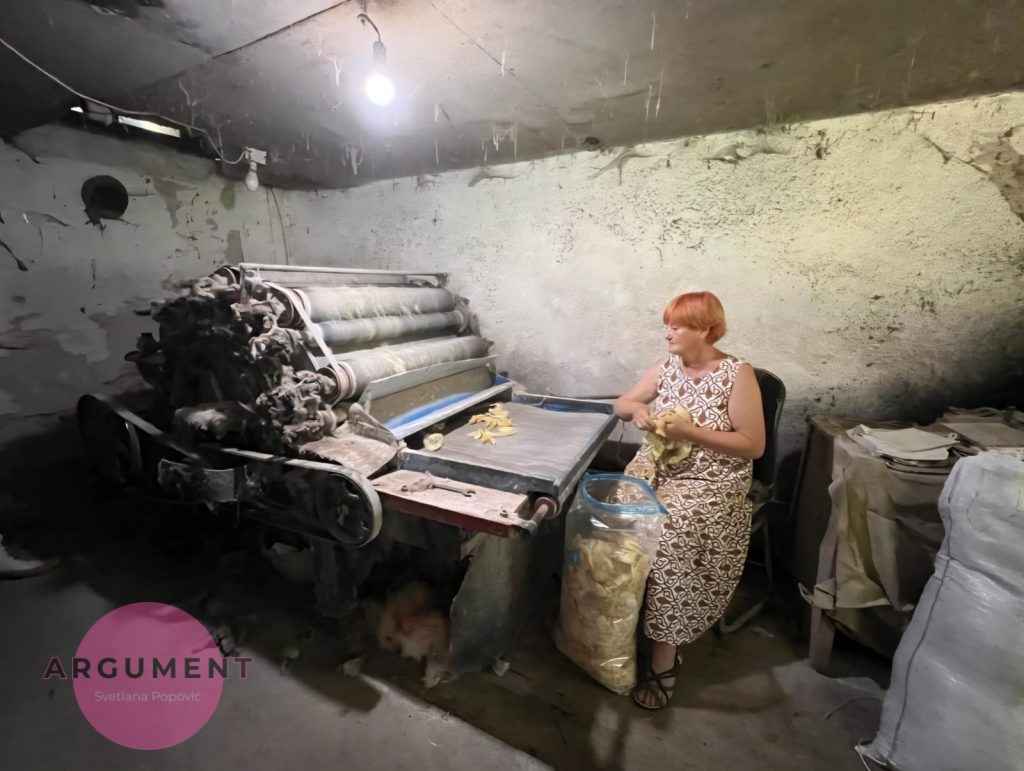
The reasons for discarding wool lie in the complex, costly, and time-consuming process of turning it into a garment. “In traditional households, this process included: raising sheep, shearing the wool, manually removing impurities from the fleece, washing the wool in cauldrons, rinsing it in rivers and streams, drying it in the sun, carding, combing and drafting, spinning, dyeing, weaving or knitting, embroidery, and finally sewing the garment,” explains Jelena Đukanović.
A large amount of waste wool is also generated as a by-product of livestock farming, where sheep are raised for meat and milk. Modern technology is trying to find solutions to this problem by creating wool-based insulation products for construction (eco-friendly projects), or by using it in agriculture as a slow-release fertilizer.
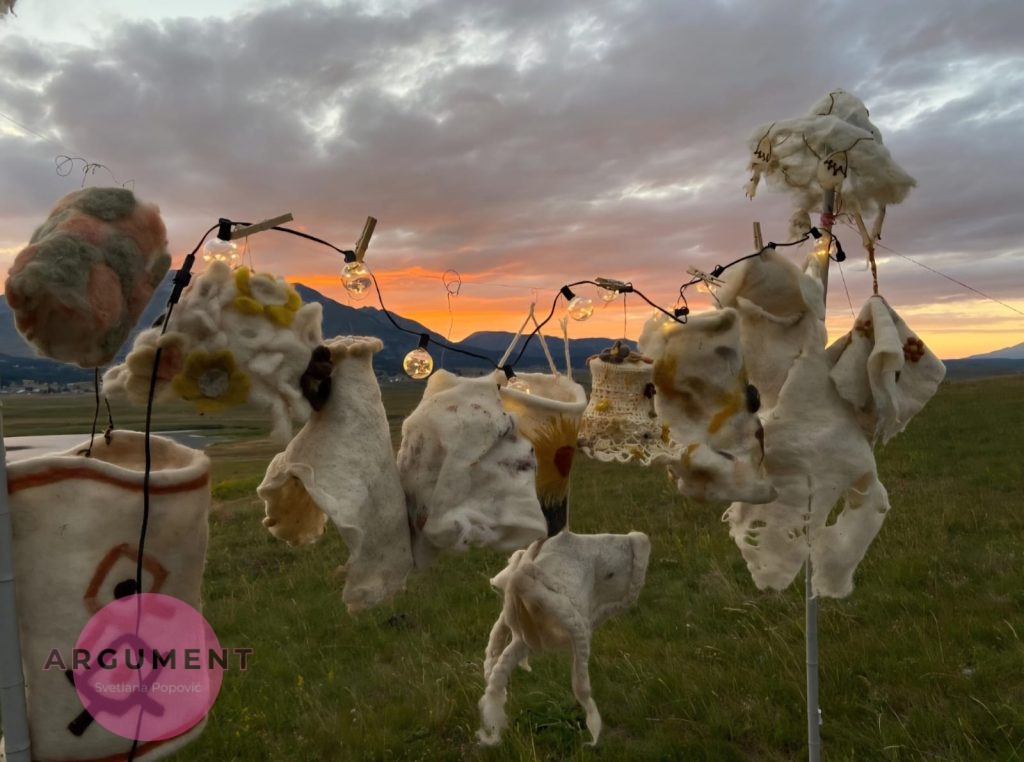
Industrial processing of wool is also complex, but the entire process is mechanized, and the resulting textiles are more diverse for clothing, interior, or other uses. The real reason wool has been pushed aside is the influence of the “synthetic lobby.” The emergence of artificial fibers in the early 1940s led to a revolution in the fashion and textile industry—enabling cheap, durable clothing to be produced in large quantities and made accessible to the widest population.
“Wool fiber is one of the most perfect natural materials, whose morphological properties modern technology has not yet managed to match. Due to its complex and costly processing, we can conclude that wool is a luxury material. This is also proven by the global fashion industry, where products made from the wool of noble breeds—such as Merino sheep, Alpaca, Llama, or Camel hair—reach exceptionally high prices,” says M.A. Đukanović.
Argument: Wool and wool products labeled *Made in Montenegro* as an authentic and desirable way to promote the country as a tourist destination?
Mr Đukanović: Your question is also the answer—it is almost impossible to launch such a complex project unless the state recognizes it as an opportunity and stands behind it. Countries in the region have created space and a legal framework for the popularization, revival, and development of traditional crafts through tax and other incentives. In addition to organizing the purchase and processing of wool, it would also be necessary to provide training and professional development for new spinners, knitters, and weavers. Mastering the techniques and skills of handcraft is a process. The Ministry of Culture and Media of Montenegro has, in recent years, been encouraging young creators to engage in the field of creative industries, which can be an important first step in positioning Montenegro within the European creative industries market. The concept of unique, hand-knitted and woven products—or small series of luxury clothing—could be an opportunity for local designers and women from the community who would bring them to life.
Naša sagovornica kaže da vunu koju i sama koristi najčešće za izradu djela malog formata, radove primijenjene i konceptualne umjetnosti, dobija od prijatelja stočara, jer ta sirovina na našem tržištu praktično nema cijenu. Nekada je važilo pravilo da kilogram vune košta kao kilogram soli. Sada za otkup jednog runa stočar u Crnoj Gori skoro da ne može platiti ni strižu ovce.
According to global market data, the price of wool varies depending on fiber fineness. At the beginning of 2026, a kilogram of high-quality raw wool in larger quantities cost around €14, and only slightly less for the same amount of coarser material (commodity market). Retail prices for processed wool are significantly higher, so a kilogram of imported premium yarn made from Merino sheep wool or blends with Cashmere goat can reach several tens of euros in European countries.
“Who is the largest wool producer in the world?”—a question often repeated with a smile when people want to say that more was supposedly learned in the past than today. The passage of time has not changed the answer: Australia.

The story of wool and its use is entirely intentional, as European Wool Day will be marked on April 9. This year, the host of the traditional event is Ireland.
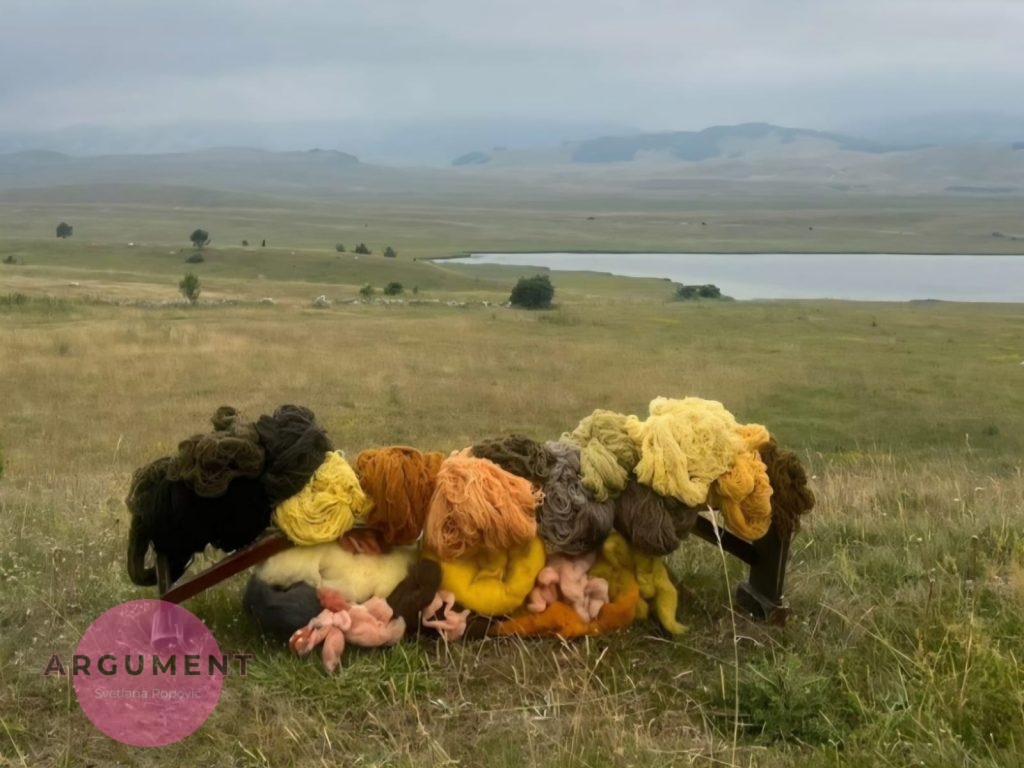
Jelena Đukanović, M.A., author of the international multidisciplinary project “All the Colors of Montenegro – Dyeing Wool with Natural Plant Dyes” and founder of the Institute for Wool of Montenegro, highlights that the head of the event’s organizing body, the European Wool Exchange Foundation, is Alberto Costa, a surgeon specialized in breast cancer. Through many years of practice, he observed that patients recover faster and better when they engage in knitting, which led him to launch the project “Therapeutical Knitting.”
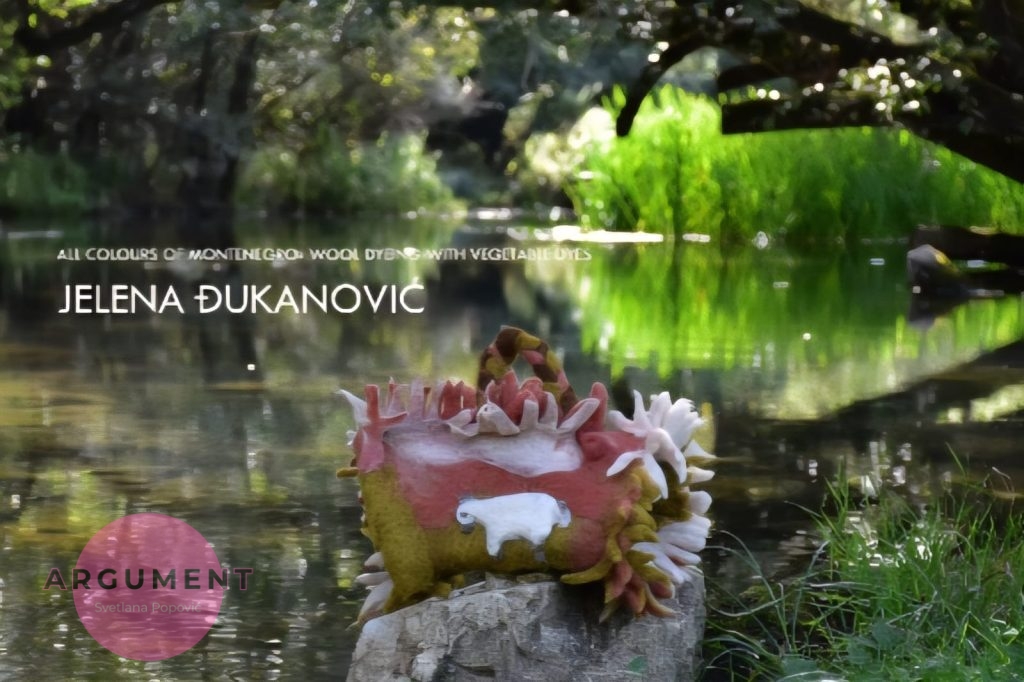
European Wool Day has already outgrown the borders of the European continent and is taking on the shape of a global event, significantly contributing to the popularization of wool and its importance for human health from multiple perspectives (such as the treatment of dementia and other anxiety-related conditions, art therapy, etc.). It also encourages the more frequent use of wool in a modern context—as a material for artistic expression and creativity.
The Institute for Wool of Montenegro, in cooperation with the Faculty of Textile Technology at the University of Zagreb, presented itself last year in Rome with three films titled “Wool for Health.” This year, in Ireland, they will present an innovative product—“Baby Rug,” made from domestic wool dyed with plant-based colors—created by Sofija Đukanović.